Interview questions to ask remote engineering manager candidates
Engineering manager interview questions for remote roles require assessing distributed leadership, async communication, and timezone management skills.
October 23, 2026 • 20 min read

Engineering manager interview questions for remote candidates should assess distributed team leadership, asynchronous communication skills, and remote technical oversight capabilities. The most effective include timezone management scenarios, remote collaboration examples, and virtual team building approaches, ensuring candidates can lead engineering teams across geographic boundaries successfully.
Introduction
Hiring a remote engineering manager requires a different approach than traditional in-office recruitment. With 7,000+ verified remote engineering positions re-verified daily on platforms like RemoteOnly.io, companies face intense competition for top remote engineering manager talent. The right engineering manager interview questions separate candidates who simply work from home from those who excel at leading distributed technical teams.
Remote engineering managers must balance technical expertise with unique skills: asynchronous communication, timezone coordination, virtual mentorship, and distributed project oversight. A 2026 analysis of remote engineering teams shows that managers who master these competencies deliver 34% faster sprint completion rates than those who merely replicate in-office management practices remotely.
This guide provides battle-tested engineering manager interview questions specifically designed for remote roles. You'll learn which questions reveal remote leadership capability, how to structure your interview rounds for distributed candidates, and what answers indicate genuine remote management experience versus theoretical knowledge.
Key Takeaways
- Remote engineering manager interviews require 5-7 structured rounds focusing on distributed team leadership, not just technical skills
- Effective questions assess asynchronous communication, timezone management, and virtual team building capabilities
- Behavioral questions about past remote management experience predict future performance better than hypothetical scenarios
- Technical depth questions must evaluate ability to review code and architecture decisions remotely
- Cultural fit questions should explore self-motivation, documentation habits, and remote collaboration preferences
Core Remote Leadership Questions for Engineering Manager Candidates
Remote engineering management demands specific leadership capabilities that don't emerge in traditional office environments. These questions probe whether candidates understand the fundamental differences between co-located and distributed team leadership.
Asynchronous Communication and Documentation
Strong remote engineering managers prioritize written communication and comprehensive documentation over synchronous meetings. Ask candidates: "Describe your approach to documenting technical decisions for a distributed team spanning 8+ timezones." Listen for specific tools (Notion, Confluence, GitHub wikis), update cadences, and how they ensure team members in all timezones access critical information.
Follow up with: "Walk me through how you handled a situation where asynchronous communication failed and caused project delays." This reveals problem-solving skills and whether they learn from distributed communication breakdowns.
Additional asynchronous communication questions include:
- How do you balance synchronous video calls with asynchronous updates for your team?
- What's your process for ensuring remote team members don't feel excluded from important discussions?
- Describe your documentation standards for technical specs, architecture decisions, and sprint planning
- How do you handle urgent technical issues when team members are offline across different timezones?
- What metrics do you track to measure communication effectiveness in remote teams?
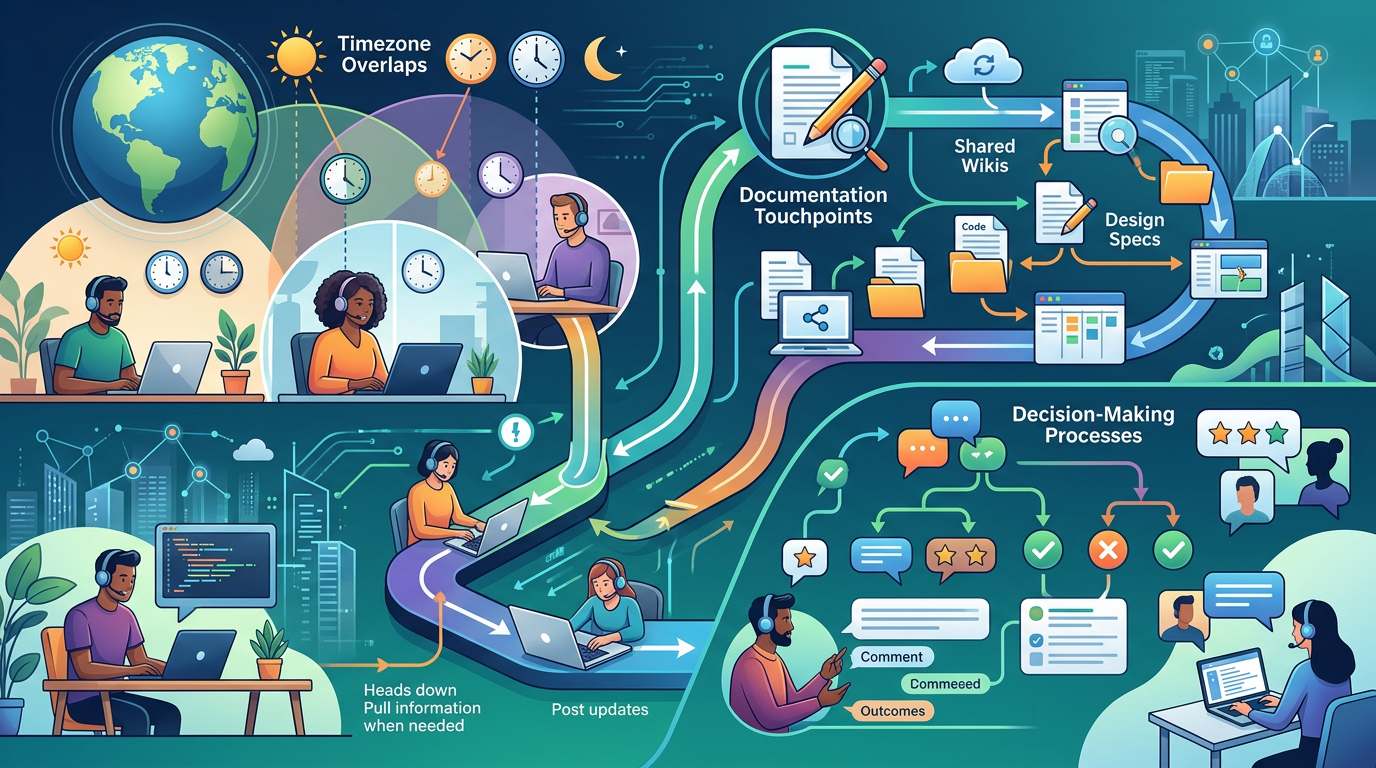
Infographic showing asynchronous communication workflow for remote engineering teams with documentation touchpoints, timezone overlaps, and decision-making processes
Distributed Team Building and Culture
Ask: "How do you build trust and psychological safety within a remote engineering team you've never met in person?" Effective answers include specific virtual team building activities, one-on-one video call cadences, and intentional relationship-building practices beyond work discussions.
Remote culture questions that reveal management depth:
- Describe a time you identified and resolved team conflict without in-person interaction
- How do you celebrate team wins and individual achievements in a distributed environment?
- What's your approach to onboarding new remote engineers to ensure they integrate successfully?
- How do you identify early signs of burnout or disengagement in remote team members?
- What virtual rituals or routines have you established to maintain team cohesion?
Remote Performance Management
Performance management becomes more nuanced when you can't observe daily work patterns. Ask: "How do you evaluate engineer performance and productivity in a remote setting without micromanaging?" Look for output-based metrics, clear goal-setting frameworks (OKRs, sprint commitments), and regular feedback loops.
The best remote engineering managers focus on outcomes and impact rather than hours logged or activity metrics. They should articulate specific examples of helping underperforming remote engineers improve through structured feedback and support.
Technical Depth Questions for Remote Engineering Managers
Remote engineering managers must maintain technical credibility while managing distributed teams. These engineering manager interview questions assess whether candidates can provide technical guidance without physical proximity to their teams.
Remote Code Review and Technical Oversight
Ask: "Describe your code review process for a distributed team. How do you ensure code quality and knowledge sharing across timezones?" Strong candidates discuss pull request standards, asynchronous review expectations, automated testing requirements, and how they mentor junior engineers through written feedback.
Technical oversight questions include:
- How do you stay technically current while managing a remote team full-time?
- Walk me through how you'd debug a production issue with engineers across 3 continents
- What's your approach to architecture reviews when you can't whiteboard in person?
- How do you evaluate technical trade-offs with distributed stakeholders?
- Describe your process for technical spike planning and execution in remote teams
- How do you ensure consistent coding standards across a geographically distributed team?
Remote Technical Decision Making
Remote environments require different decision-making processes. Ask: "Tell me about a significant technical decision you made with a distributed team. How did you gather input, build consensus, and communicate the final direction?"
This question reveals whether candidates understand that remote technical decisions require more explicit documentation, broader asynchronous input gathering, and clearer communication of rationale than in-office decisions.
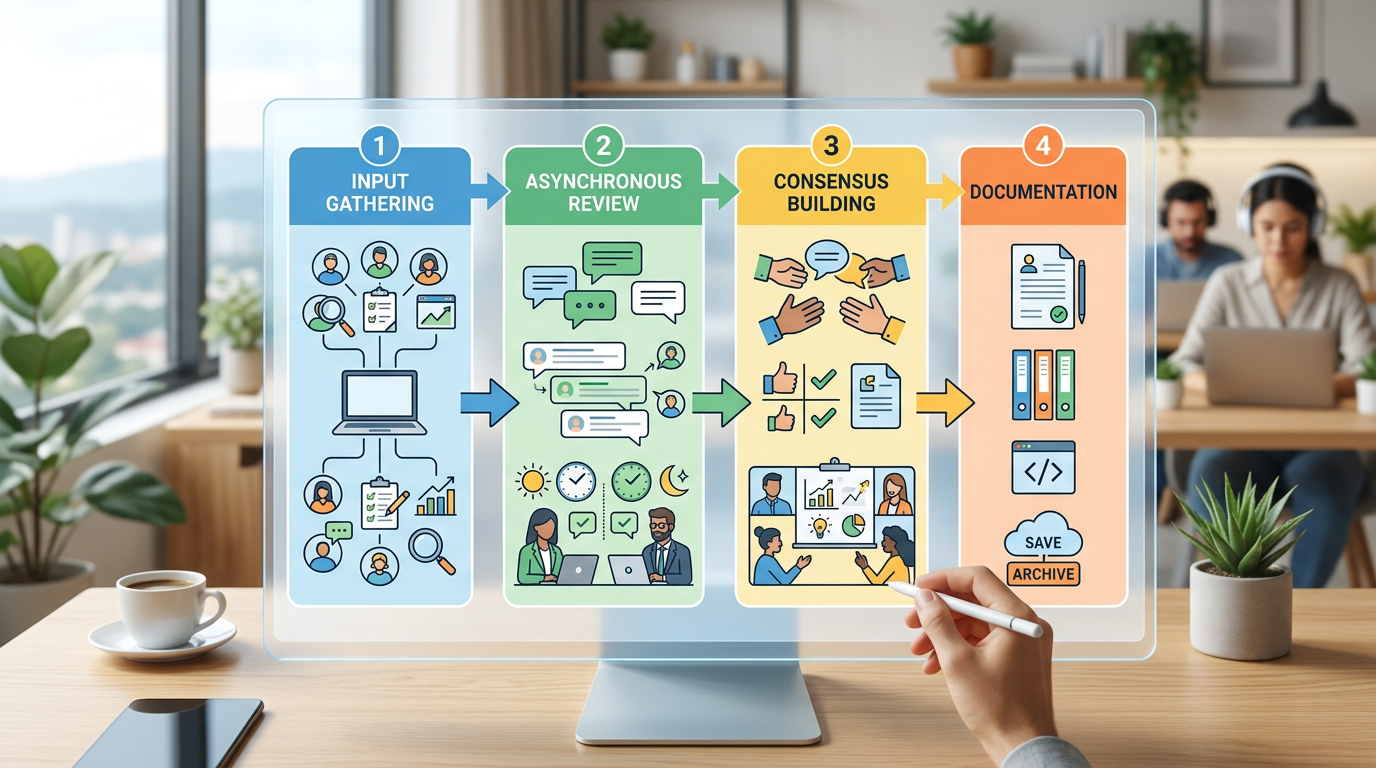
Flowchart showing remote technical decision-making process with input gathering, asynchronous review, consensus building, and documentation stages
Operational Excellence Questions for Distributed Teams
Remote engineering managers must establish operational frameworks that work across timezones and work styles. These questions assess organizational and process management capabilities.
Sprint Planning and Project Management
Ask: "How do you structure sprint planning, standups, and retrospectives for a team spanning 12+ timezones?" Effective remote engineering managers adapt agile ceremonies to distributed contexts rather than forcing everyone into inconvenient synchronous meetings.
Look for answers that include:
- Asynchronous standup updates via Slack, Geekbot, or similar tools with optional synchronous check-ins
- Recorded sprint planning sessions with written summaries for team members who can't attend live
- Retrospectives that collect feedback asynchronously before a shorter synchronous discussion
- Clear sprint documentation accessible to all team members regardless of timezone
- Flexible meeting schedules that rotate to accommodate different timezone groups fairly
Remote Hiring and Onboarding
Ask: "Walk me through your process for interviewing, hiring, and onboarding remote engineers. What's worked well and what would you change?" This reveals whether candidates have actually built remote teams or only managed existing ones.
Strong answers address:
- Structured interview processes that assess remote work capabilities alongside technical skills
- Onboarding documentation and 30-60-90 day plans for remote new hires
- Buddy systems or mentorship programs for remote integration
- Equipment and home office setup support
- Early relationship building with new remote team members
Timezone and Schedule Management
Ask: "How do you handle timezone challenges when your team spans Americas, Europe, and Asia?" This practical question separates candidates with real distributed team experience from those who managed co-located teams remotely during pandemic lockdowns.
Effective answers include specific strategies: core collaboration hours, rotating meeting times, asynchronous-first communication defaults, and explicit timezone considerations in project planning and deadline setting.
Behavioral Questions That Reveal Remote Management Capability
Behavioral questions based on past experiences predict future performance more accurately than hypothetical scenarios. These engineering manager interview questions uncover real remote leadership experience.
Remote Conflict Resolution
Ask: "Tell me about a time you resolved a significant conflict between remote team members. What was the situation, how did you approach it, and what was the outcome?" Remote conflict resolution requires different skills than in-person mediation because you lack body language cues and can't pull people into a conference room immediately.
Listen for: one-on-one video conversations before group discussions, written documentation of issues and agreements, follow-up to ensure resolution, and proactive conflict prevention strategies.
Remote Crisis Management
Ask: "Describe a production outage or critical technical issue you managed with a distributed team. How did you coordinate the response across timezones?" This reveals crisis management capabilities and whether candidates can mobilize remote teams effectively under pressure.
Strong answers include:
- Clear incident response protocols documented before crises occur
- Communication channels and escalation paths for urgent issues
- Coordination strategies when primary on-call engineers are in different timezones
- Post-incident review processes that capture learnings asynchronously
Remote Team Scaling
Ask: "Tell me about a time you scaled a remote engineering team from X to Y people. What challenges did you face and how did you maintain team effectiveness during growth?" Scaling remote teams introduces complexity around communication overhead, sub-team formation, and maintaining culture.
Cultural Fit and Remote Work Style Questions
Remote engineering managers need specific work styles and preferences to succeed. These questions assess whether candidates will thrive in your remote environment.
Self-Management and Autonomy
Ask: "How do you structure your own workday as a remote engineering manager? Walk me through a typical day." This reveals self-management capabilities, boundary setting between work and personal life, and whether they understand the autonomy required for remote management success.
Red flags include: inability to disconnect from work, lack of structured routines, or excessive meeting-heavy schedules that leave no time for deep work or asynchronous communication.
Communication Preferences
Ask: "What's your preferred balance between synchronous and asynchronous communication? How do you decide which communication method to use for different situations?" Remote-first engineering managers default to asynchronous communication and use synchronous meetings intentionally for specific purposes like brainstorming or relationship building.
Remote Tool Proficiency
Ask: "What tools and technologies do you consider essential for managing remote engineering teams? How have you used them effectively?" Look for familiarity with:
- Project management tools (Jira, Linear, Asana, Monday.com)
- Communication platforms (Slack, Discord, Microsoft Teams)
- Documentation systems (Notion, Confluence, Coda)
- Code collaboration tools (GitHub, GitLab, Bitbucket)
- Video conferencing (Zoom, Google Meet, Around)
- Asynchronous video (Loom, Vidyard)
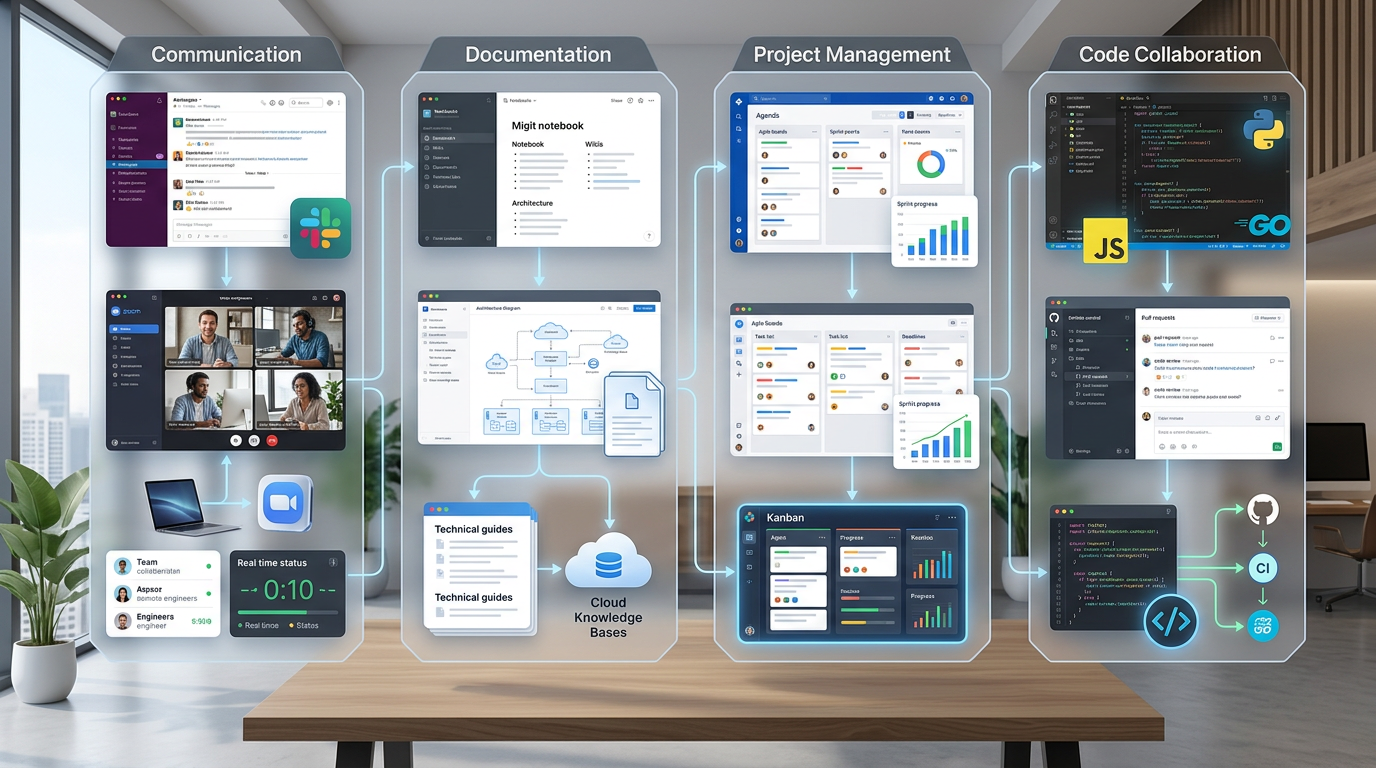
Visual diagram of remote engineering management tech stack showing categories of tools for communication, documentation, project management, and code collaboration
How to Structure Remote Engineering Manager Interview Rounds
The interview process itself should demonstrate your company's remote capabilities. Structure your engineering manager interview questions across multiple rounds that assess different competencies.
Typical Remote Engineering Manager Interview Structure
Most effective remote engineering manager interviews include 5-7 rounds conducted over 2-3 weeks:
- Initial screening call (30 minutes): Recruiter or HR validates remote work experience, timezone compatibility, salary expectations, and basic qualifications
- Hiring manager video interview (60 minutes): Remote leadership philosophy, management style, and cultural fit assessment
- Technical depth interview (60-90 minutes): System design, architecture discussions, and technical problem-solving with senior engineers
- Cross-functional collaboration interview (45-60 minutes): Stakeholder management with product managers, designers, or other department leads
- Team interview (60 minutes): Meet potential direct reports to assess team building and communication style
- Executive interview (45 minutes): Strategic thinking, company vision alignment, and leadership presence with VP or C-level
- Final discussion (30 minutes): Candidate questions, logistics, and mutual fit confirmation
Remote Interview Best Practices
When conducting remote engineering manager interviews, follow these guidelines:
- Send detailed interview schedules with timezone clarity at least 48 hours in advance
- Provide interview focus areas and suggested preparation topics beforehand
- Use consistent video conferencing platforms across all rounds
- Record interviews (with permission) so team members in different timezones can review
- Share written feedback forms immediately after each round
- Make hiring decisions within 5-7 business days to respect candidate timelines
- Communicate clearly about next steps and timeline after every interaction
Evaluating Remote Management Experience
Distinguish between candidates who managed co-located teams remotely during COVID-19 versus those with genuine distributed team experience. Ask: "How long have you managed fully remote teams? What's the difference between managing a team that went remote temporarily versus a team that was remote-first from the start?"
Candidates with true remote management experience understand that distributed teams require different processes, communication norms, and management approaches rather than simply replicating office practices via video calls.
Red Flags to Watch for During Remote Engineering Manager Interviews
Certain responses indicate candidates may struggle with remote engineering management despite strong technical credentials.
Communication Red Flags
Watch for these warning signs:
- Preference for synchronous communication as default rather than asynchronous-first approach
- Inability to articulate clear documentation practices or standards
- Vague answers about how they've handled timezone challenges
- Overemphasis on video calls and meetings without discussing written communication
- Lack of specific examples of remote communication tools and how they've used them
Management Philosophy Red Flags
Be cautious of candidates who:
- Focus on activity monitoring or productivity tracking tools rather than outcomes
- Express concerns about team members being "offline" during business hours
- Can't describe how they build trust without physical presence
- Emphasize "face time" or "being available" rather than results and impact
- Struggle to provide examples of successful remote team building or culture initiatives
Technical Oversight Red Flags
Question candidates who:
- Haven't conducted code reviews asynchronously or can't explain their review process
- Lack experience with remote pair programming or collaborative debugging
- Can't articulate how they maintain technical credibility without being physically present
- Show unfamiliarity with modern remote collaboration tools for technical work
Questions Remote Engineering Manager Candidates Should Ask You
Strong remote engineering manager candidates ask insightful questions about your remote culture, processes, and expectations. Evaluate candidates based on the quality of their questions.
Questions About Remote Culture and Operations
Expect candidates to ask:
- What percentage of the company is remote versus hybrid or in-office?
- How distributed is the engineering team across timezones?
- What's your approach to asynchronous versus synchronous communication?
- How do you handle team building and relationship development remotely?
- What tools and platforms does the team use for collaboration?
- How do you measure engineering manager success in a remote environment?
- What's your remote onboarding process for new managers?
Questions About Team and Technical Environment
Strong candidates probe:
- What's the current team structure and how has it evolved?
- What are the biggest technical and people challenges facing the team?
- How does the team handle technical decisions and architecture reviews remotely?
- What's the sprint cadence and agile process?
- How do product, design, and engineering collaborate across timezones?
- What's the on-call rotation and incident response process?
Preparing Your Interview Panel for Remote Engineering Manager Hiring
Train your interview team to assess remote management capabilities effectively. Many interviewers default to evaluating technical skills and general management experience without probing remote-specific competencies.
Interview Training for Remote Assessment
Ensure your interview panel understands:
- The difference between managing co-located teams and distributed teams
- Specific remote management competencies to evaluate in their interview round
- How to probe for concrete examples rather than accepting hypothetical answers
- Red flags that indicate remote management challenges
- Structured evaluation criteria for consistent candidate assessment
Creating Scorecards for Remote Engineering Manager Interviews
Use structured scorecards that explicitly assess remote management capabilities alongside technical and leadership skills. Include categories like: asynchronous communication effectiveness, timezone management, remote team building, distributed project oversight, and remote culture development.
Rate candidates on each dimension using consistent criteria across all interviewers to reduce bias and improve hiring decisions.
Frequently Asked Questions
How to prepare for an engineering manager interview?
Prepare by reviewing your remote leadership examples, documenting specific metrics from past teams, and practicing answers about distributed team management. Research the company's remote culture, prepare questions about their timezone distribution and communication norms, and gather examples of asynchronous decision-making, conflict resolution, and remote team building from your experience.
What are the 5 C's of interviewing?
The 5 C's of interviewing are Competency, Character, Communication, Culture Fit, and Career Direction. For remote engineering managers, emphasize communication skills particularly around asynchronous collaboration, cultural fit with distributed work environments, and competencies specific to leading remote technical teams across timezones.
What are the typical rounds of an engineering manager interview?
Typical remote engineering manager interviews include 5-7 rounds: initial recruiter screening, hiring manager interview, technical depth assessment, cross-functional collaboration interview, team interview with potential reports, executive interview, and final discussion. The process spans 2-3 weeks with all rounds conducted via video conferencing.
What are some good interview questions for an engineering manager position?
Good remote engineering manager interview questions include: "How do you build trust in distributed teams?", "Describe your asynchronous communication approach", "How do you handle timezone challenges?", "Walk me through a remote conflict resolution example", and "How do you evaluate remote engineer performance?" Focus on distributed leadership capabilities.
How do you assess technical depth in remote engineering manager candidates?
Assess technical depth through system design discussions, architecture review scenarios, and code review process explanations. Ask candidates to walk through how they debug production issues remotely, evaluate technical trade-offs asynchronously, and maintain technical credibility without physical presence. Request specific examples of remote technical mentorship.
What distinguishes remote-first engineering managers from those who managed remotely during COVID-19?
Remote-first engineering managers design processes for distributed teams from the start, default to asynchronous communication, and build intentional remote culture. COVID-19 remote managers often replicated office practices via video calls without adapting to distributed work patterns. Ask about pre-2020 remote experience and timezone management strategies.
How many engineering manager interview questions should you ask per round?
Ask 5-8 focused questions per interview round, allowing time for deep follow-up questions and candidate questions. For 60-minute interviews, plan 3-4 primary questions with follow-ups. Prioritize behavioral questions about past remote management experience over hypothetical scenarios, and leave 10-15 minutes for candidate questions.
Conclusion
Effective engineering manager interview questions for remote candidates must go beyond traditional technical and leadership assessments. Focus on asynchronous communication capabilities, timezone management strategies, distributed team building experience, and remote-specific operational skills. Structure your interview process across 5-7 rounds that assess different competencies, train your interview panel to evaluate remote management capabilities, and distinguish candidates with genuine distributed team experience from those who simply worked from home temporarily.
The best remote engineering managers combine technical depth with exceptional written communication, intentional culture building, and outcome-focused performance management. By asking targeted questions about past remote leadership experiences and evaluating answers against clear remote-specific criteria, you'll identify candidates who will excel at leading distributed engineering teams.
Browse 7,000+ verified remote engineering manager positions on RemoteOnly.io, where every listing is re-verified daily against employer ATS feeds.