Account Executive Interview Questions: Remote Hiring Guide
Remote account executive hiring demands different questions. This guide covers 40+ behavioral, technical, and sales competency questions that reveal remote...
October 23, 2026 • 25 min read

Account executive interview questions for remote roles assess sales skills, self-management capabilities, and virtual communication proficiency. The most effective include territory management scenarios, remote collaboration examples, CRM proficiency tests, and time zone coordination questions that evaluate a candidate's ability to close deals independently while working distributed.
Remote sales teams now represent 47% of all account executive positions, yet 63% of hiring managers report difficulty identifying candidates who can thrive without in-office oversight. The challenge isn't just finding someone who can sell—it's finding someone who can sell effectively from a home office, manage their pipeline autonomously, and build client relationships through screens instead of handshakes.
Hiring a remote account executive requires a fundamentally different interview approach than traditional sales hiring. You need to evaluate not only closing ability and product knowledge, but also digital communication skills, self-discipline, and the capacity to maintain energy and motivation without physical team presence. The best account executive interview questions for remote roles dig into specific scenarios that reveal how candidates have previously navigated the unique challenges of distributed sales work.
This guide provides a comprehensive framework for interviewing remote account executives, with questions organized by competency area, evaluation criteria for each response, and red flags that indicate poor remote work fit. Whether you're building your first distributed sales team or scaling an existing remote operation, these interview strategies will help you identify candidates who can deliver results from anywhere.
Key Takeaways
- Remote account executive interviews must assess self-management, digital communication, and autonomous pipeline management alongside traditional sales competencies
- Behavioral questions focused on past remote work experience predict future performance better than hypothetical scenarios
- Technical assessments should include CRM proficiency, video presentation skills, and asynchronous communication abilities
- Cultural fit questions reveal whether candidates can maintain motivation and collaboration without physical office presence
- Structured scorecards with remote-specific criteria eliminate bias and improve hiring consistency across distributed teams
Core Sales Competency Questions for Remote Account Executives
Start with foundational sales skills before layering in remote-specific assessments. These account executive interview questions establish baseline selling capability and reveal how candidates approach the sales process.
Pipeline Management and Forecasting
Remote account executives must manage their pipeline with exceptional discipline since managers can't observe daily activity. Ask candidates to walk through their current pipeline structure, forecasting methodology, and how they prioritize opportunities.
Effective candidates provide specific numbers—average deal size, conversion rates by stage, and typical sales cycle length—demonstrating they actively monitor and optimize their pipeline rather than passively working leads. Look for responses that include CRM hygiene practices, regular pipeline reviews, and proactive opportunity qualification.
- "Walk me through your current pipeline. What's your total pipeline value and how is it distributed across sales stages?"
- "How do you forecast your quarterly revenue? What's your typical forecast accuracy percentage?"
- "Describe your weekly pipeline management routine. What activities do you perform to keep opportunities moving forward?"
- "Tell me about a time your pipeline fell short of quota. How did you identify the problem and what actions did you take?"
- "What metrics do you track daily, weekly, and monthly to ensure you'll hit your number?"
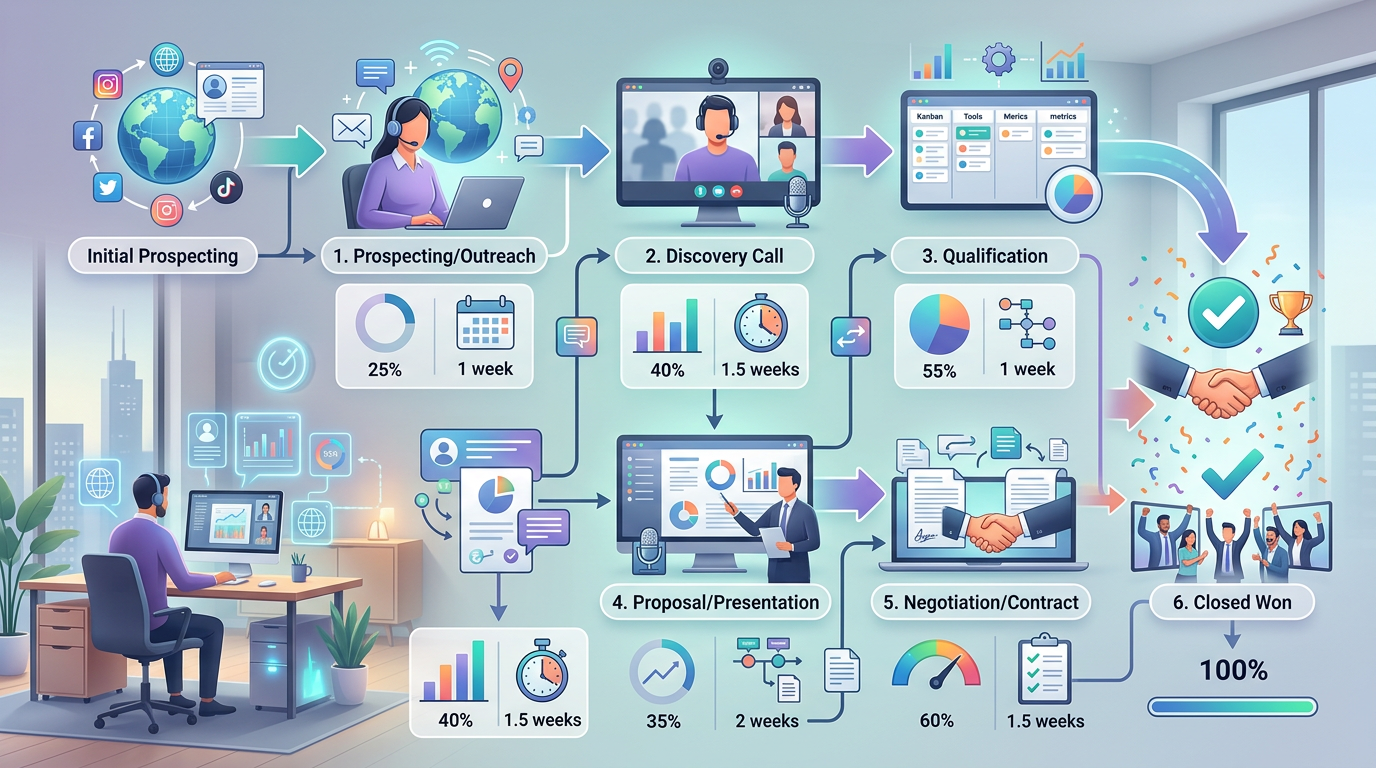
Flowchart showing remote account executive pipeline management stages with conversion rates and typical timeframes for each stage
Deal Closing and Negotiation Skills
Remote selling requires different closing techniques since you can't rely on in-person rapport building or physical presence. Probe for specific examples of complex deals closed virtually, including how candidates handled objections and negotiated terms through digital channels.
Strong candidates describe multi-threaded sales processes with multiple stakeholder touchpoints, demonstrate consultative selling approaches rather than transactional pitches, and explain how they build urgency without face-to-face interaction. Red flags include reliance on discounting to close deals, inability to articulate value propositions clearly, or lack of structured sales methodology.
- Ask for the candidate's largest deal closed remotely, including deal size, sales cycle length, and number of stakeholders involved
- Request a detailed walkthrough of their sales process from initial contact through contract signature
- Probe for specific objection handling examples, particularly price objections and competitive situations
- Inquire about their approach to multi-threading and building champion relationships virtually
- Explore how they create urgency and drive deals to close without in-person meetings
Remote Work Capability Assessment Questions
Remote sales success depends heavily on self-management, digital communication proficiency, and the ability to maintain productivity without supervision. These questions reveal whether candidates possess the discipline and skills required for distributed work.
Self-Management and Accountability
Without managers observing daily activity, remote account executives must demonstrate exceptional self-direction. The best account executive interview questions in this category focus on past behavior rather than hypothetical scenarios.
Look for candidates who describe specific systems they've built to structure their days, track their activities, and hold themselves accountable to goals. Strong responses include morning routines, time-blocking practices, and personal performance tracking beyond what their CRM requires.
- "Describe your typical workday structure when working remotely. How do you organize your time and prioritize activities?"
- "Tell me about a time you fell behind on activity goals while working remotely. How did you identify the problem and get back on track?"
- "What systems or tools do you use to stay organized and ensure nothing falls through the cracks?"
- "How do you maintain motivation and energy during slow periods or after losing deals?"
- "Describe a situation where you had no meetings scheduled for an entire day. How did you structure that time productively?"
Digital Communication and Presentation Skills
Remote account executives must excel at video presentations, written communication, and asynchronous collaboration. Assess both synchronous skills like video demos and asynchronous abilities like email sequences and Slack communication.
During the interview itself, evaluate the candidate's video presence—camera positioning, lighting, background professionalism, eye contact, and audio quality. These details reveal how seriously they take virtual communication. Ask candidates to share their screen and walk through a previous presentation or demo to assess their digital presentation capabilities.
- "Walk me through how you prepare for and deliver product demos over video. What tools do you use and how do you keep prospects engaged?"
- "Tell me about a time a video presentation didn't go well. What happened and what did you learn?"
- "How do you build rapport with prospects you've never met in person?"
- "Describe your approach to email communication. How do you structure outreach sequences and follow-ups?"
- "What's your strategy for staying visible and maintaining relationships with prospects between scheduled calls?"
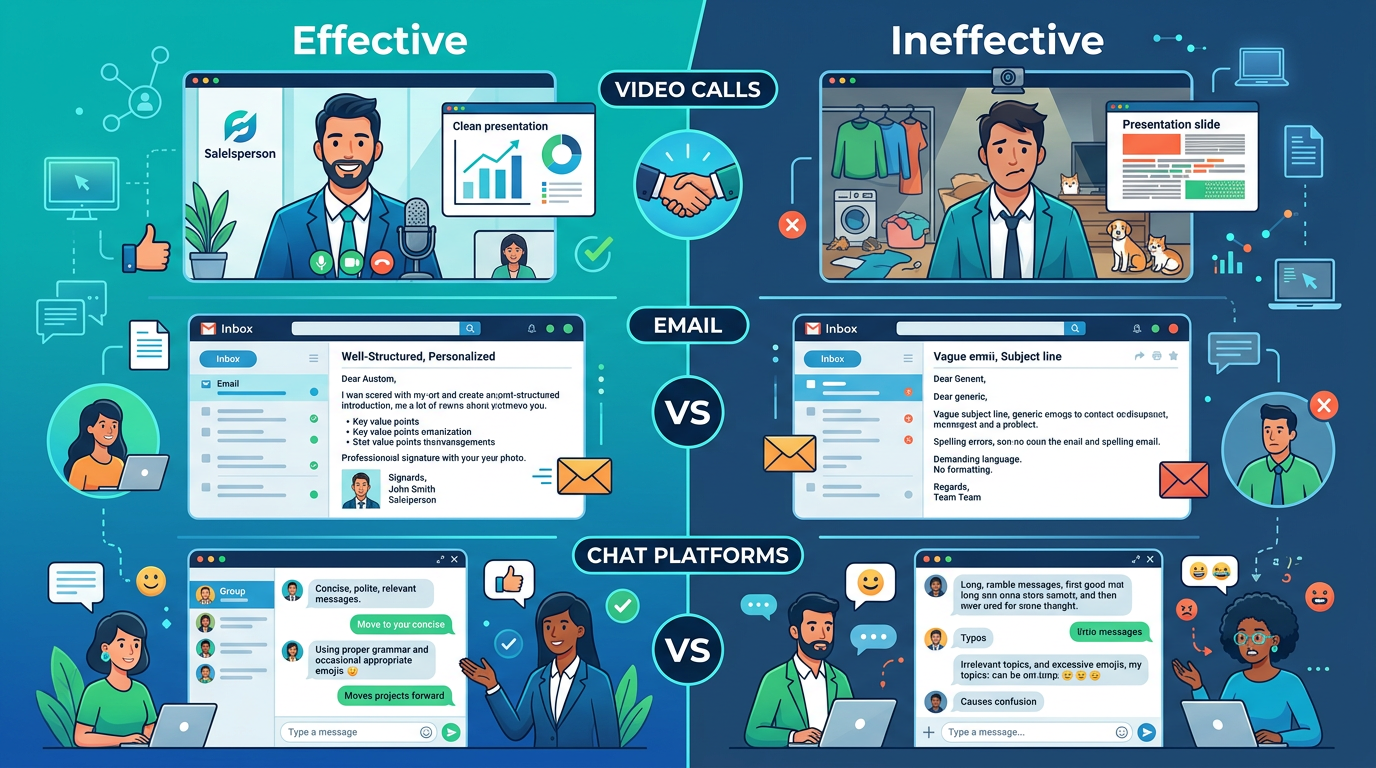
Comparison infographic showing effective versus ineffective remote sales communication practices across video calls, email, and chat platforms
Technical Proficiency and Tools Assessment
Remote account executives rely heavily on technology for every aspect of their work. Assess familiarity with CRM systems, sales engagement platforms, video conferencing tools, and digital collaboration software.
CRM and Sales Technology Stack
Ask specific questions about the tools candidates have used and how they've leveraged them to improve performance. Generic answers like "I'm comfortable with Salesforce" don't provide enough information. Probe for advanced features they've used, customizations they've implemented, and how they've used data to optimize their approach.
Top-performing remote account executives treat their CRM as a strategic tool, not just a reporting requirement. They describe building custom dashboards, creating automated workflows, and analyzing activity data to identify what's working.
- "What CRM systems have you used? Describe the most advanced features or customizations you've implemented."
- "Walk me through how you log activities and update opportunities in your CRM. What's your daily hygiene routine?"
- "What sales engagement or outreach automation tools have you used? How did they impact your productivity?"
- "Tell me about a time you used CRM data to identify a problem in your sales process and make an adjustment."
- "What other tools are essential to your remote sales workflow? How do they integrate with your CRM?"
Video Conferencing and Screen Sharing Proficiency
Every prospect interaction happens through video conferencing platforms. Candidates must demonstrate comfort with Zoom, Google Meet, Microsoft Teams, and similar tools, including advanced features like breakout rooms, screen annotations, and recording.
Consider including a practical assessment where candidates deliver a 10-minute presentation on a topic of their choice. Evaluate their screen sharing setup, slide design, pacing, engagement techniques, and technical troubleshooting when issues arise.
Remote Collaboration and Team Integration Questions
Remote account executives must collaborate effectively with distributed team members, including sales development reps, customer success managers, sales engineers, and leadership. These account executive interview questions assess teamwork capabilities in virtual environments.
Cross-Functional Collaboration
Probe for specific examples of how candidates have worked with other teams while remote. Look for proactive communication patterns, clear handoff processes, and willingness to help colleagues despite physical distance.
Strong candidates describe regular touchpoints with SDRs to provide feedback on lead quality, collaboration with customer success on account expansion opportunities, and partnership with marketing on campaign effectiveness. They understand that remote work requires more intentional communication than office environments.
- "Describe how you've collaborated with SDRs or BDRs in previous remote roles. How did you provide feedback and optimize lead quality?"
- "Tell me about a time you needed help from a sales engineer or solutions consultant on a deal. How did you coordinate remotely?"
- "How do you stay connected with your sales team when everyone works from different locations?"
- "Describe a situation where miscommunication with a colleague impacted a deal. How did you resolve it?"
- "What's your approach to onboarding and getting up to speed when joining a new remote sales team?"
Manager Relationship and Communication Cadence
Remote account executives need to communicate proactively with managers rather than waiting for check-ins. Ask about their preferred management style, communication frequency, and how they've kept managers informed in previous roles.
Red flags include candidates who need daily oversight, struggle to articulate when they need help, or have had conflicts with remote managers. Look for self-sufficient professionals who view their manager as a strategic resource rather than a supervisor.
Territory and Time Zone Management Questions
Remote account executives often cover large geographic territories spanning multiple time zones. Assess how candidates plan coverage, schedule calls across time zones, and maintain work-life boundaries when prospects are always awake somewhere.
Geographic Territory Planning
Ask candidates to describe their approach to territory planning and account prioritization when they can't physically visit customers. Strong responses include account segmentation strategies, virtual territory mapping, and data-driven prioritization based on opportunity size and likelihood to close.
The best remote account executives build territory plans that focus their time on highest-value opportunities rather than trying to cover every account equally. They describe using intent data, engagement signals, and account fit scores to determine where to invest effort.
- "How would you approach territory planning for a remote role covering multiple states or regions?"
- "Describe your strategy for prioritizing accounts when you have more opportunities than time."
- "Tell me about a time you had to manage accounts across multiple time zones. How did you structure your schedule?"
- "What's your approach to account research and preparation when you can't visit customer locations?"
- "How do you decide which opportunities deserve the most attention in a given week?"
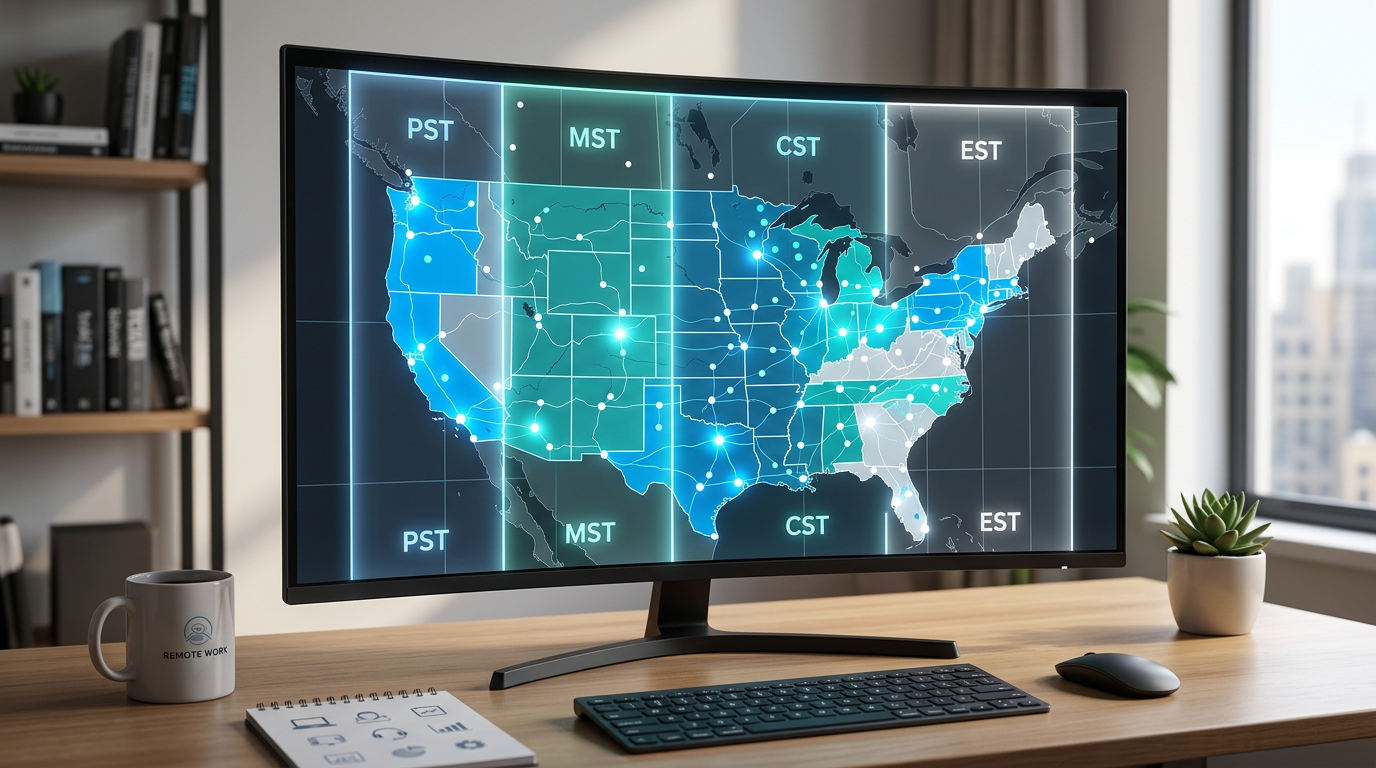
Map visualization showing remote account executive territory coverage with color-coded account prioritization and time zone overlays
Work-Life Balance and Boundary Setting
Remote work can blur boundaries between professional and personal time. Assess whether candidates have healthy approaches to disconnecting, managing energy, and preventing burnout when their office is always accessible.
Look for candidates who describe clear start and end times to their workdays, dedicated workspace separate from living areas, and intentional practices for transitioning between work and personal time. Warning signs include candidates who brag about working 12-hour days or being always available.
Behavioral Questions Specific to Remote Sales Challenges
The best predictors of future remote sales performance are past behaviors in similar situations. These behavioral account executive interview questions surface how candidates have handled common remote selling challenges.
Overcoming Isolation and Maintaining Motivation
Remote sales can feel isolating, especially during slow periods or after losing deals. Ask candidates to describe specific times they've struggled with motivation while working remotely and what strategies they used to overcome those challenges.
Strong candidates acknowledge that motivation fluctuates and describe concrete practices they use to maintain consistency—morning routines, exercise habits, peer accountability partnerships, or professional development activities. They understand that remote success requires proactive energy management.
- "Tell me about the most challenging period you've experienced while working remotely. How did you navigate it?"
- "Describe a time you felt isolated or disconnected from your team while remote. What did you do about it?"
- "How do you celebrate wins when working alone from home?"
- "What do you do when you're having an unproductive day and can't seem to focus?"
- "Tell me about your support system outside work. How do you maintain relationships when you're home all day?"
Adapting to Changing Circumstances
Remote work environments change frequently—new tools get adopted, processes evolve, team members turn over. Assess candidate flexibility and learning agility through questions about past transitions and changes.
Look for examples of candidates learning new technologies quickly, adapting their approach based on feedback, and maintaining performance through organizational changes. Remote employees need higher adaptability than office-based counterparts since they can't rely on informal hallway conversations to stay informed.
Practical Assessment and Role-Play Scenarios
Interview questions alone don't fully reveal remote sales capability. Include practical assessments that simulate real remote work situations.
Mock Sales Call or Presentation
Ask candidates to deliver a 15-minute product presentation or discovery call via video, treating you as a prospect. Provide basic information about your company and the scenario 24 hours in advance to allow preparation time.
Evaluate their pre-call research, opening rapport building, questioning technique, presentation structure, objection handling, and closing approach. Also assess technical execution—screen sharing smoothness, slide design quality, pacing, and recovery when technical issues occur.
The best candidates treat the mock call as a real opportunity, demonstrating thorough research, asking insightful questions, and adapting their approach based on your responses rather than delivering a scripted pitch.
Written Communication Sample
Request a writing sample or assign a brief written exercise. Options include crafting a cold outreach email sequence, writing a follow-up email after a discovery call, or creating a proposal executive summary.
Remote account executives write constantly—emails, Slack messages, proposal content, and internal updates. Their writing must be clear, concise, and persuasive. Look for proper grammar, logical structure, appropriate tone, and ability to convey value without jargon.
Red Flags and Warning Signs in Remote AE Interviews
Certain responses and behaviors during interviews indicate candidates will struggle with remote sales work. Watch for these warning signs throughout your interview process.
Communication and Technical Red Flags
Poor video setup during the interview itself suggests candidates don't take virtual communication seriously. Warning signs include bad lighting, unprofessional backgrounds, frequent audio issues, unstable internet connections, or inability to share their screen smoothly.
If candidates can't present themselves professionally during an interview when they're trying to make the best impression, they definitely won't maintain standards during daily prospect calls. Technical difficulties happen occasionally, but patterns of poor preparation indicate deeper issues.
- Joining video interviews late without communication or apology
- Visible distractions in their environment (pets, family members, messy backgrounds)
- Inability to articulate specific tools they've used or technical proficiency
- Vague answers about their current remote work setup and environment
- Poor email communication during interview scheduling and follow-up
Self-Management and Accountability Red Flags
Candidates who struggle to provide specific examples of self-directed work, describe needing frequent check-ins, or blame external factors for past performance issues will likely require excessive management when remote.
Listen carefully for ownership and accountability in their responses versus victim mentality and excuse-making. Top remote performers take responsibility for outcomes and describe what they learned from failures rather than deflecting blame.
- Inability to describe daily routines, schedules, or productivity systems
- Responses that blame managers, products, marketing, or market conditions for missed quotas
- Lack of specific metrics or data when discussing past performance
- Describing previous remote roles as "easier" or requiring less effort than office roles
- Overemphasis on work-life balance without discussing performance and results
Structuring Your Remote Account Executive Interview Process
Use a multi-stage interview process that progressively evaluates different competencies while respecting candidate time. A structured approach reduces bias and improves hiring consistency across your team.
Recommended Interview Stage Structure
Design a process that typically spans 2-3 weeks with four to five distinct stages. Each stage should have clear evaluation criteria and advance only candidates who meet your requirements.
- Initial Screening (30 minutes): Phone or video call with recruiter or sales leader covering basic qualifications, remote work experience, compensation expectations, and timeline
- Hiring Manager Interview (45-60 minutes): Deep dive into sales competencies, pipeline management, past performance, and remote work capabilities using behavioral questions
- Practical Assessment (30-45 minutes): Mock sales call or presentation delivered via video to assess digital communication skills and sales methodology
- Team Interview (30-45 minutes): Conversation with potential peers or cross-functional partners to evaluate collaboration fit and cultural alignment
- Executive Interview (30 minutes): Final conversation with sales leadership focused on strategic thinking, career goals, and mutual fit assessment
Creating Interview Scorecards for Remote Roles
Develop standardized scorecards that rate candidates on specific remote-relevant competencies. This structure eliminates bias and creates consistent evaluation across interviewers and candidates.
Include both traditional sales competencies (closing ability, pipeline management, product knowledge) and remote-specific factors (self-management, digital communication, technical proficiency, collaboration skills). Rate each dimension on a clear scale with specific behavioral anchors defining each rating level.
Require interviewers to complete scorecards immediately after each interview while details are fresh, and aggregate scores across all interviewers before making hiring decisions. This data-driven approach dramatically improves hiring quality compared to gut-feel decisions.
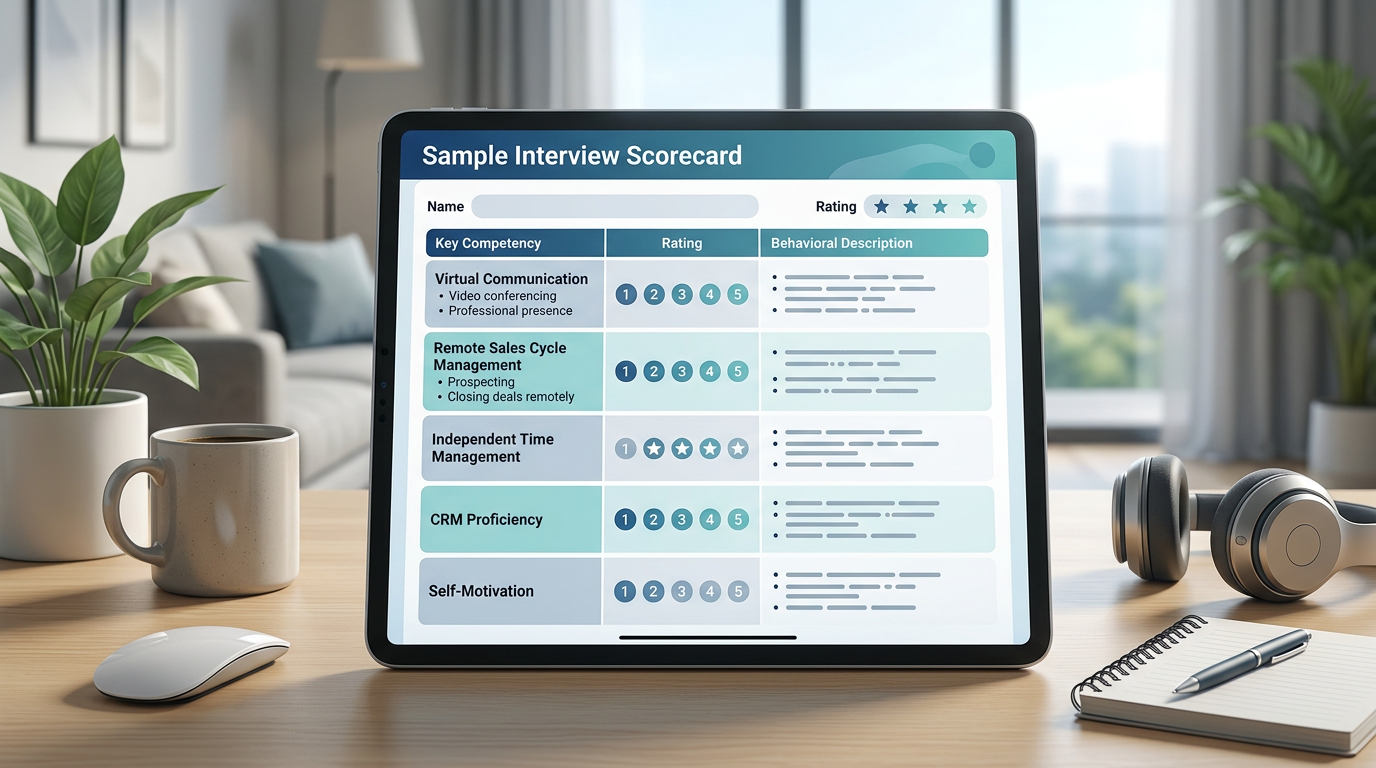
Sample interview scorecard template showing remote account executive competencies with rating scales and behavioral anchor descriptions
Frequently Asked Questions
What are the 5 P's of an interview?
The 5 P's are Preparation, Punctuality, Professionalism, Presentation, and Post-interview follow-up. For remote account executive interviews, preparation includes testing technology beforehand, punctuality means joining video calls on time, professionalism covers appropriate attire and environment, presentation focuses on clear communication, and follow-up involves sending thank-you emails within 24 hours.
What is the 30-60-90 rule in an interview?
The 30-60-90 rule refers to a plan outlining what you'll accomplish in your first 30, 60, and 90 days. Remote account executives should prepare a plan covering initial training and relationship building (30 days), beginning active prospecting and pipeline development (60 days), and closing first deals while reaching full productivity (90 days).
What are the 10 main interview questions?
The 10 main questions include: Tell me about yourself, Why this role, Describe your sales process, Walk through your biggest deal, How do you handle rejection, Describe your pipeline management approach, What's your remote work experience, How do you stay motivated independently, Tell me about missing quota, and What questions do you have for us.
What is your 3 weaknesses' best answer?
Choose real weaknesses you're actively improving, not humble brags. For remote account executives, effective examples include: struggling with work-life boundaries (solved by setting strict schedules), initially poor at asynchronous communication (improved through writing practice), or difficulty building rapport virtually (addressed by developing video presence skills). Always explain your improvement strategy.
How do you assess remote work capability during interviews?
Assess remote capability through behavioral questions about past remote experience, practical video presentation exercises, evaluation of their interview setup and technical proficiency, and questions about self-management systems. Look for specific examples of maintaining productivity, managing time independently, and collaborating virtually rather than hypothetical answers about how they would work remotely.
What technical skills should remote account executives demonstrate?
Remote account executives need proficiency in CRM systems (Salesforce, HubSpot), video conferencing platforms (Zoom, Google Meet), sales engagement tools (Outreach, SalesLoft), and collaboration software (Slack, Microsoft Teams). They should demonstrate smooth screen sharing, professional video presence, and ability to troubleshoot common technical issues independently during virtual meetings.
How many interview stages are appropriate for remote account executive roles?
Four to five interview stages work best: initial screening, hiring manager interview, practical sales assessment, team interview, and executive conversation. This structure thoroughly evaluates sales skills and remote capabilities while respecting candidate time. Each stage should have clear evaluation criteria and decision points to avoid unnecessarily prolonging the process.
Conclusion
Hiring remote account executives requires a fundamentally different interview approach that evaluates self-management, digital communication proficiency, and autonomous work capabilities alongside traditional sales competencies. The most effective account executive interview questions probe past remote work behavior, assess technical skills through practical demonstrations, and reveal whether candidates possess the discipline to thrive without physical oversight.
Structure your interview process with multiple stages that progressively evaluate different competencies, use standardized scorecards to eliminate bias, and include practical assessments like mock video presentations to simulate real remote work scenarios. Watch for red flags including poor video setup, vague answers about self-management systems, and inability to provide specific performance metrics from previous roles.
Build your remote sales team with candidates who demonstrate proven remote sales success, strong technical proficiency, and the self-direction to manage complex sales cycles independently across distributed environments.